What business interruption insurance covers in Nebraska
Business interruption insurance in Nebraska is one of those coverages most owners never think about until they desperately need it. A tornado tears through Fremont. A frozen pipe bursts and floods a restaurant in Blair. A fire shuts down a Dodge County manufacturer for three months. In every one of those scenarios, the building damage gets attention, but the revenue lost while the doors are closed can be just as devastating. That is exactly what business interruption insurance is designed to replace.
Also called business income insurance, this coverage steps in when a covered peril forces your business to suspend or reduce operations. It pays for the income you would have earned, helps cover ongoing fixed expenses, and, in some policies, reimburses the extra costs you take on to keep the business alive during recovery.
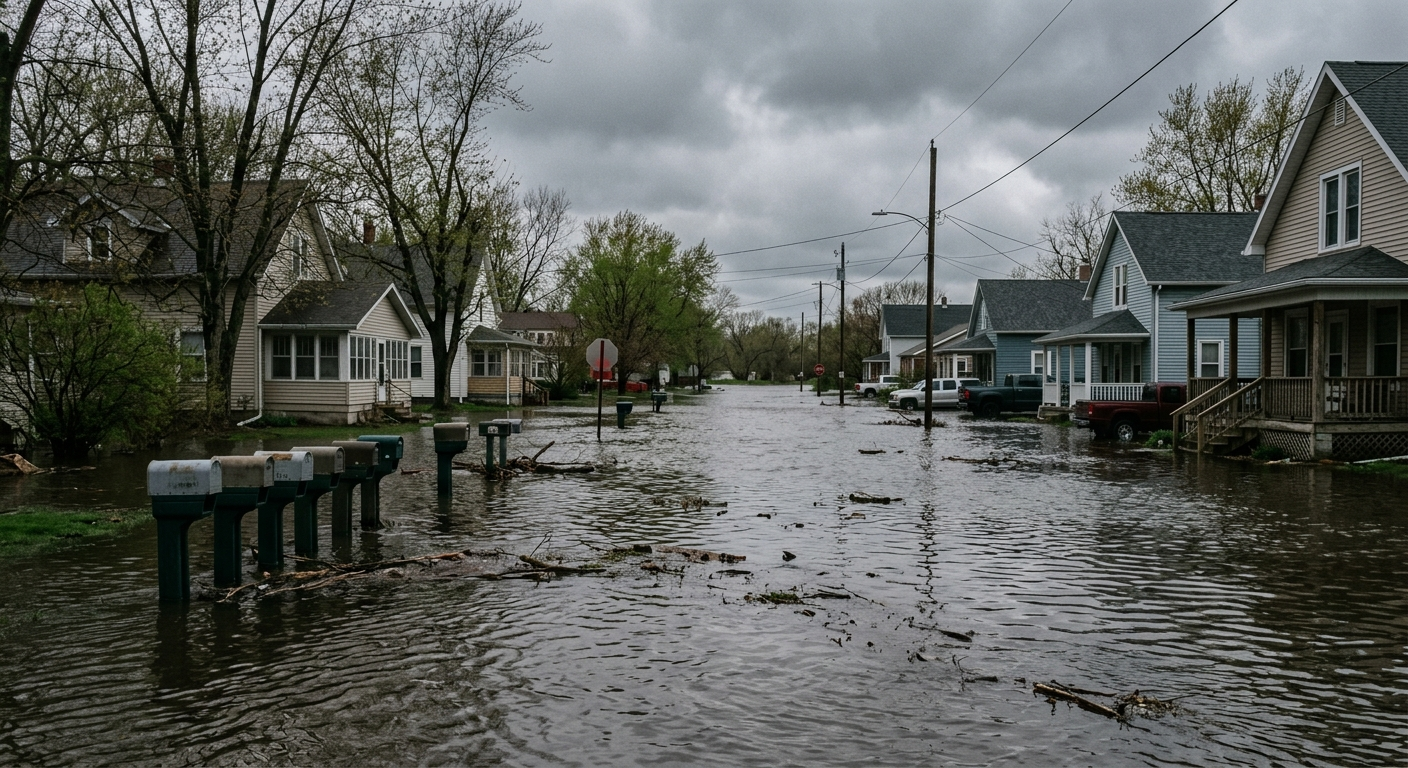
Nebraska businesses face a specific set of risks that make this coverage a practical necessity. The state sits squarely in the path of severe convective storms, spring flooding along the Platte and Elkhorn rivers, and winter weather that can knock out power to entire communities for days at a stretch. The 2019 "Bomb Cyclone" flooding alone caused more than $1.3 billion in agricultural and infrastructure losses across eastern Nebraska. Businesses that had business income coverage recovered. Many that did not are no longer open.
What the policy actually pays
Understanding the mechanics of a business interruption policy prevents a lot of confusion at claim time. Most standard policies reimburse three broad categories of loss.
- Lost net income: the profit you would have earned during the shutdown period, calculated against your prior financial records.
- Continuing fixed expenses: rent or mortgage payments, loan installments, utilities that keep running, payroll for key employees you need to retain.
- Extra expenses: reasonable costs to minimize the disruption, such as renting temporary space, leasing replacement equipment, or paying overtime to speed up repairs.
The policy pays for a defined period called the restoration period , which runs from the date of the covered loss until the date the business is, or reasonably should be, restored to normal operations. Most standard policies cap this at 12 months, though extensions up to 24 months are available for larger operations with longer rebuild timelines.
One detail that trips up many Nebraska business owners: there is almost always a waiting period (sometimes called a time deductible) built into the policy, typically 48 to 72 hours. The clock does not start running until that waiting period expires, so very short outages may not trigger a payment.
What triggers a business interruption claim
Business interruption coverage does not activate on its own. It is attached to a commercial property policy and only responds when the cause of the shutdown is a peril already covered by that property policy. If a fire destroys your building and forces you to close, business interruption kicks in because fire is a covered peril. If a flood shuts you down, you typically need a separate commercial flood policy for the interruption coverage to attach to something.
In Nebraska, this distinction matters. Standard commercial property policies exclude flood by default. Business owners near the Platte River corridor, around Fremont, or in low-lying parts of Washington and Dodge counties should think carefully about whether their property policy, and by extension their business interruption coverage, would actually respond to a flood-driven shutdown. Pairing a commercial flood policy with your property and business income coverage closes that gap.
Common triggers that apply under a standard policy include:
- Fire and smoke damage, including damage from a neighboring business's fire that spreads to your property.
- Wind and hail, a major exposure in Nebraska's storm corridor running from Fremont through Blair and into the Elkhorn River valley.
- Burst or frozen pipes, especially relevant for businesses that experience hard freezes every winter.
- Vandalism and theft, when the resulting physical damage forces a temporary closure.
- Equipment breakdown, often covered under a separate endorsement rather than the base property form.
Coverage options worth knowing about
A basic business income form works for many businesses, but insurers offer several extensions worth understanding before you finalize a policy.
Contingent business interruption
This extension covers income lost when a key supplier or customer suffers a covered loss that disrupts your operations, even though your own property is untouched. A grain elevator in northeast Nebraska that relies on a single parts supplier would benefit from contingent coverage if that supplier burns down and cannot deliver.
Civil authority coverage
If a government authority orders an area shutdown because of damage to nearby property and that order prevents access to your business, civil authority coverage extends your business income protection. This became a real concern for Nebraska businesses during road closures following major flooding events, when access to entire commercial districts was cut off for weeks.
Utility services interruption
This endorsement covers income loss caused by an interruption to water, electricity, or gas service originating from outside your property. For food service businesses, manufacturers, or any operation dependent on refrigeration, extended power outages are a serious threat.
Extended period of indemnity
Even after repairs are complete, businesses rarely snap back to pre-loss revenue overnight. Customers go elsewhere, supply chains need to be rebuilt, and staff may have moved on. An extended period of indemnity endorsement continues coverage for a set number of days after the restoration period ends to account for this ramp-up time. Periods of 30, 60, or 90 days are common.
How business interruption fits into a BOP
For most small to mid-sized Nebraska businesses, business interruption coverage comes bundled inside a Business Owners Policy (BOP). A BOP combines commercial property, general liability, and business income into a single policy form, usually at a lower combined premium than purchasing each coverage separately.
The business income piece in a standard BOP is often written on an "actual loss sustained" basis up to 12 months, which works well for many retail shops, professional offices, and service businesses in communities like Fremont, Blair, or Wahoo. Larger businesses with complex operations, long rebuild timelines, or high fixed overhead may need to pull business income out of the BOP and write it on a standalone commercial property form where limits and extensions can be customized.
Not sure which approach fits your operation? An independent agent can compare forms and pricing across multiple carriers to find an answer, rather than locking you into a single company's approach. You can also read more about how a BOP is structured on the BOP service page or explore the business interruption coverage page for a breakdown of how this coverage is written here at Eric Luebbe Insurance Agency.
How much business interruption insurance do Nebraska businesses need
Setting the right limit is one of the trickier parts of buying this coverage, and underinsurance is a common and painful mistake. The limit should reflect the total revenues your business would generate during the maximum restoration period, minus costs that stop when operations stop (like raw materials). What remains is essentially gross profit plus continuing fixed expenses.
A simplified way to think about it: if your business earns $600,000 in annual revenue and your variable costs (goods, materials) run about 40 percent of revenue, your gross profit is roughly $360,000 per year . With a 12-month policy limit, you need at least $360,000 in business income coverage plus whatever your fixed overhead runs during that period. Many businesses underestimate this and buy $100,000 to $150,000 without doing the math first, which leaves a large gap when a real loss hits.
Nebraska-specific rebuilding timelines also matter. The state experienced widespread contractor shortages after the 2019 flooding, and commercial rebuild times stretched well beyond initial estimates. A 12-month restoration period that looked sufficient on paper turned out to be too short for some operations. Discussing extended restoration endorsements with your agent before a loss happens is far easier than arguing about it during a claim.
What business interruption insurance does not cover
Knowing the exclusions is just as important as knowing what is included. Common gaps include:
- Flood damage, as noted above, requires a separate commercial flood policy for the business income coverage to respond.
- Pandemic or communicable disease shutdowns: most carriers added explicit exclusions after 2020, and Nebraska courts have generally upheld these exclusions in coverage disputes.
- Utilities failures originating on your property: the base policy typically requires the disruption to come from an external source unless you have an endorsement.
- Undocumented income: if your financials do not reflect the income you claim to have lost, the carrier will only pay what the records support. Clean books matter.
- Pre-existing slowdowns: if your business was already struggling before the loss, the carrier will adjust the loss calculation accordingly.
If your operation is particularly sensitive to supply chain disruption or cyber-related outages, consider how those scenarios interact with your business income coverage. Our post on cyber liability insurance for Nebraska small businesses covers how a cyber event can shut down operations and why standard property and business income policies do not always respond to that specific scenario.
Get the right business interruption coverage for your Nebraska business
Every Nebraska business is different, and the right business interruption policy for a restaurant in Fremont looks different from the right policy for a manufacturer in West Point or a retail shop in Bennington. The coverage amount, restoration period, and endorsements all need to fit your specific operation and financial profile.
Eric Luebbe Insurance Agency is an independent insurance agency serving businesses across eastern Nebraska, from Fremont and Blair to Elkhorn, Wahoo, and beyond. As an independent agency, we compare business interruption options across multiple carriers to find coverage that fits your business, not just the easiest policy to sell. Call us at (402) 721-5454 or reach out through our contact page to start the conversation. Getting the right coverage in place before a storm, fire, or other disruption hits is what keeps Nebraska businesses running through whatever comes next.