Crop insurance in Nebraska: what every farmer should understand
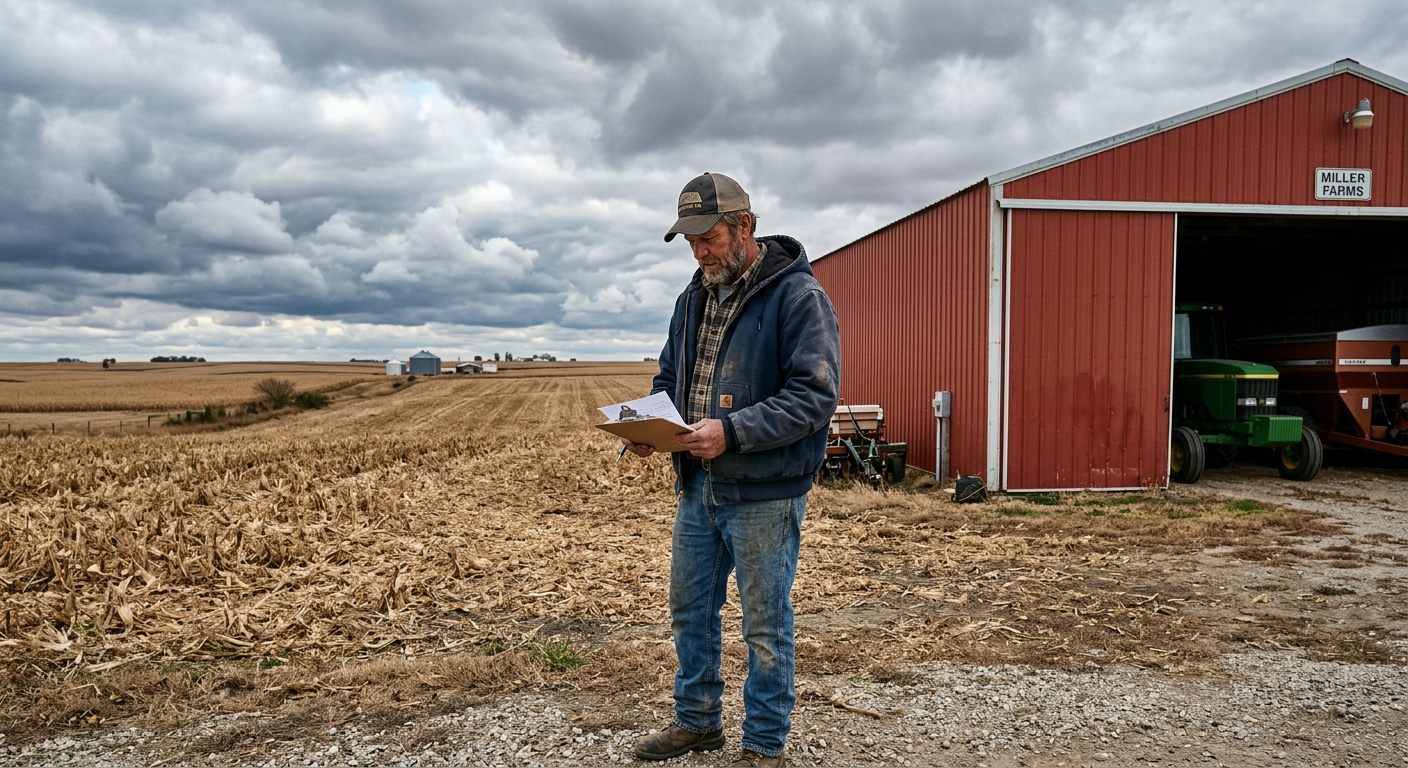
Nebraska is one of the top agricultural states in the country. From the cornfields of the Platte River Valley to the soybean and wheat acres stretching across eastern Nebraska, farming here is serious business. Crop insurance in Nebraska is not a luxury or an afterthought for most farm operations. It is the financial foundation that keeps a bad growing season from becoming a catastrophic one. If you farm in Nebraska or manage land near communities like Fremont, Blair, West Point, or North Bend, read on for what crop insurance actually covers, how it works, and what decisions you need to make before enrollment deadlines arrive.
Why crop insurance matters more in Nebraska than most states
Nebraska sits in a region that can throw almost anything at a crop: late spring frosts, early fall freezes, severe hail, drought, flooding along the Missouri and Platte rivers, and derecho wind events that flatten corn in minutes. Nebraska consistently ranks among the leading states for crop insurance activity, which reflects both the scale of farming here and the regularity of weather-related losses.
In 2023 alone, Nebraska farmers received more than $700 million in crop insurance indemnity payments from federally subsidized policies. That number is not a sign that the system is broken. It is evidence that the risk is real and that insurance is doing exactly what it is supposed to do: keeping farm operations financially viable after bad years so they can plant again the following spring.
For farm families in Dodge County, Washington County, or Saunders County, a single hailstorm can wipe out a season's revenue in twenty minutes. Crop insurance is often the only thing standing between that storm and a missed mortgage payment on the farm ground itself.
How federal crop insurance works
Crop insurance in the United States is not a purely private market. It runs through the USDA's Risk Management Agency (RMA) and is delivered through approved private insurance companies, including many of the carriers Eric Luebbe Insurance Agency works with. The federal government subsidizes a significant portion of the premium, which is part of why enrollment in federal crop insurance programs makes financial sense for most Nebraska operations.
The two main types of coverage
- Yield-based coverage (APH): Actual Production History policies pay when your actual yield falls below a guaranteed level calculated from your farm's own historical yields. If you average 185 bushels per acre on corn and elect 75% coverage, your guarantee is roughly 139 bushels. A drought year that produces 90 bushels triggers a payment.
- Revenue protection (RP): RP protects against a drop in revenue caused by low prices, low yields, or both. The revenue guarantee is calculated using a projected price set at planting time and your APH yield. If fall harvest prices collapse or your yields fall short, RP pays the difference down to your elected coverage level.
Coverage levels and what they cost
Coverage levels typically range from 50% to 85%, in five-percent increments. The higher the coverage level, the higher the premium, but federal subsidies scale with the program, so electing 75% or 80% coverage still leaves the farmer paying only a fraction of the actuarial premium. Premiums depend on your yield history, county base rates, soil type, and other factors specific to your operation. An agent can pull the actual premium estimate for your specific operation through the RMA's Cost Estimator tool.
Common crop insurance products used by Nebraska farmers
Beyond the core APH and RP policies, several other products come up regularly when working with eastern Nebraska farm accounts.
Whole-Farm Revenue Protection (WFRP)
WFRP is a good fit for diversified operations that raise multiple commodities or sell through direct markets. Instead of insuring each crop separately, it insures the whole farm's expected revenue as a single unit. For a farm near Tekamah that raises corn, soybeans, and a small beef herd, this can simplify the coverage picture considerably.
Pasture, Rangeland, and Forage (PRF)
PRF insurance is indexed to rainfall data rather than individual farm yields. It is designed for hay ground and pasture. If rainfall in your grid index falls below the threshold during the coverage intervals you choose, you receive a payment. PRF has become popular with cow-calf operators and hay producers across the more arid western reaches of Nebraska, and eastern Nebraska producers with significant hay acres are looking at it as well.
Supplemental Coverage Option (SCO) and Enhanced Coverage Option (ECO)
SCO and ECO are area-based endorsements that layer on top of an underlying RP or APH policy. SCO fills in the gap between your individual coverage level and 86% of the county average. ECO can push protection up to 90% or 95% of expected revenue at the county level. These endorsements are useful for producers who want higher effective protection without paying the full actuarial rate for individual high-coverage policies.
Key deadlines Nebraska farmers cannot miss
The crop insurance calendar in Nebraska is non-negotiable. Miss a sales closing deadline and you are looking at a full crop year without coverage. The RMA sets these dates at the national level, and they do not move for individual farms.
- Corn and soybeans: Sales closing deadlines for spring-planted crops are set by the RMA and vary by crop and county. Contact your agent well ahead of the spring planting season to confirm the exact deadline for your operation and make sure your policy is in place, your coverage level is elected, and any premium deposits are arranged.
- Winter wheat: The sales closing deadline falls in the fall, before fall planting gets underway. Check with your agent to confirm the current deadline for your county.
- Acreage reporting: After planting, you have an acreage reporting deadline to certify what was actually planted and where. Missing this step can void coverage on unreported fields. Your agent can confirm the applicable date for your crops.
- PRF enrollment: PRF for hay and pasture has a December 1 sales closing deadline for the following year.
Working with a local agent well before the spring and fall deadlines is the only way to make sure you have reviewed your APH yield history, caught any errors in USDA records, and elected the right coverage type and level before the window closes.
What crop insurance does not cover
Understanding the gaps in crop insurance is just as important as understanding what it covers. Federal crop insurance is designed to cover unavoidable natural causes of loss, not every financial risk a farm faces.
- Equipment and machinery losses: A combine fire or a tractor rollover is a property and casualty loss, not a crop insurance claim. That falls under your farm property policy or an inland marine floater. You can read more about how inland marine insurance in Nebraska fits into a complete farm coverage picture.
- Prevented planting disputes: Prevented planting coverage exists for fields that genuinely cannot be planted due to excess moisture or other insured causes, but the rules around what qualifies are specific and sometimes contested. Document everything.
- Management decisions: If you choose not to apply adequate inputs due to cost and yields suffer as a result, crop insurance is not likely to pay. The policy requires good farming practices.
- Market price speculation: Revenue protection covers price declines below the projected price set at planting, but it works alongside grain marketing strategy, not instead of it.
Farms also face liability exposures, building losses, and agribusiness risks that crop insurance was never designed to address. Our post on farm business insurance in Nebraska covers how those pieces fit together with a crop policy.
Working with an independent agent on crop insurance
Crop insurance is sold by approved private companies, and the agent you work with matters more than most people realize. An independent agent has access to multiple approved insurance providers and can help you compare delivery mechanisms, service records, and policy options. They are also your primary contact when a loss occurs and you need to file a claim quickly and accurately.
The most common mistakes Nebraska farmers make with crop insurance tend to cluster around a few issues: electing coverage levels that are too low because the premium looks expensive without accounting for the federal subsidy, failing to update APH records when yield data changes, and missing the window to add new ground or new crops to an existing policy. An agent who knows your operation and reviews your policy annually helps you avoid all three.
For operations that have grown in recent years, or for farmers who have taken on rented ground in new counties, the coverage picture can get complicated quickly. Different counties can have meaningfully different base rates, and ground that crosses a county line may need to be insured under a different practice code. These are exactly the details that get sorted out in a pre-season conversation with your agent, not in a panic just before the sales closing deadline.
Talk to Eric Luebbe Insurance Agency about your Nebraska crop coverage
Eric Luebbe Insurance Agency is an independent agency serving farmers and rural landowners across eastern Nebraska, including Fremont, Blair, West Point, Tekamah, North Bend, Hooper, and the surrounding communities. As an independent agency, we work with multiple approved crop insurance carriers rather than being locked into one company's products. That means we can compare options and find coverage that fits your operation's yield history, risk tolerance, and budget.
Whether you are a full-time row crop producer, a part-time farmer with a few hundred acres of rented ground, or a livestock operation looking at PRF for your hay base, we can walk through the options with you before the deadlines arrive. Reach out to us at (402) 721-5454 or contact us online to schedule a time to review your crop insurance coverage for the coming season. Do not wait until February to have this conversation.