Why farm liability insurance in Nebraska matters more than most producers realize
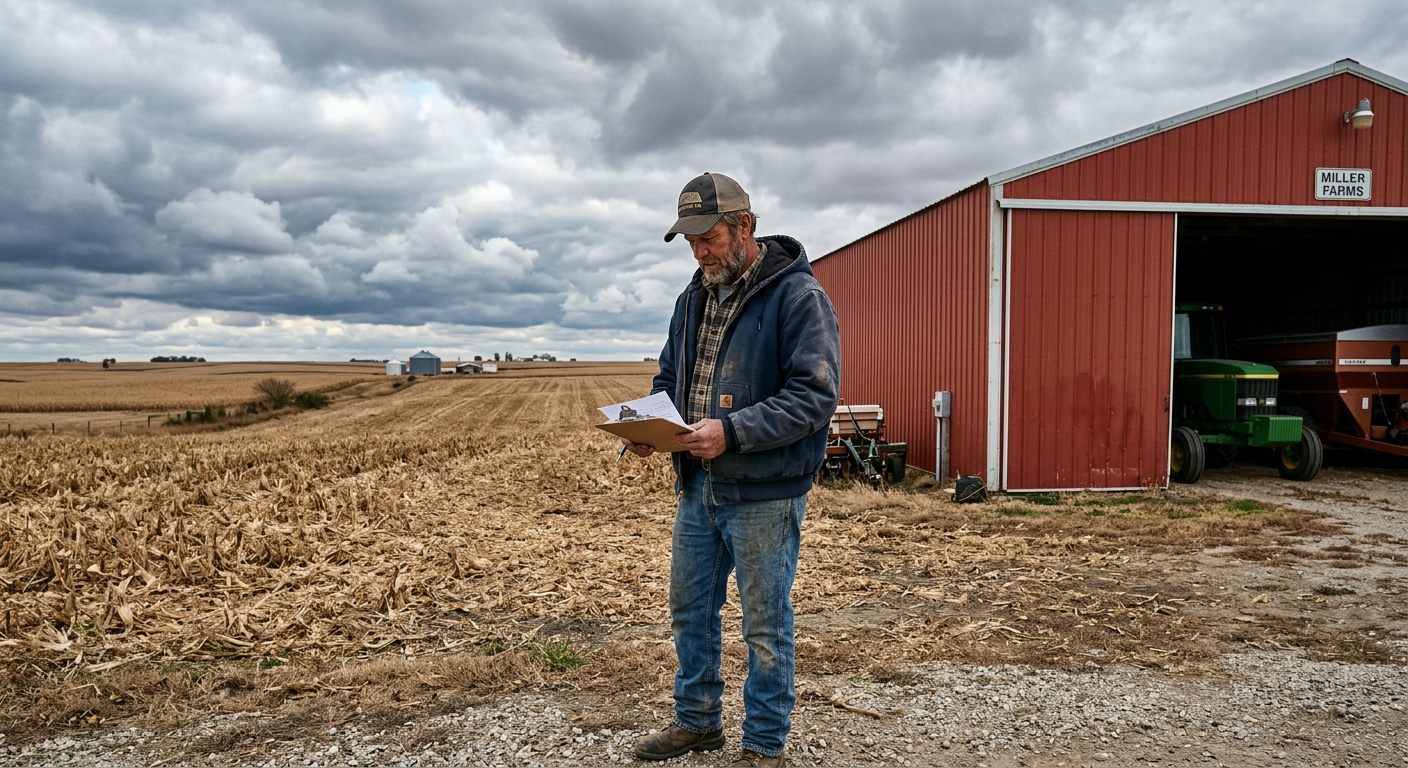
Nebraska is one of the top agricultural states in the country, with 44,300 farms and ranches covering 44.0 million acres. If you run any kind of farming operation here, whether a row crop farm outside Fremont, a cattle operation near Tekamah, or a smaller hobby farm in the Elkhorn River valley,farm liability insurance in Nebraska is one of the most important pieces of protection you can carry. It is also one of the most misunderstood. Many producers assume their standard homeowners policy covers farm-related incidents. It usually does not. The gap between what you think you have and what you actually have can cost you everything you have built.
What farm liability insurance actually covers
Farm liability insurance is designed specifically for the risks that come with agricultural operations. A standard homeowners or personal umbrella policy may not cover commercial farming activities. Farm liability fills that gap by covering bodily injury and property damage claims that arise from your farming operations.
A well-structured farm liability policy typically covers:
- Bodily injury to visitors and the public. An injury to a neighbor, farm worker, or delivery driver on your property is covered up to your policy limits.
- Property damage you cause to others. If your equipment damages a neighboring field, a fence line, or a county road, your liability coverage responds.
- Products liability. If you sell grain, produce, eggs, or other agricultural products and someone suffers a loss they attribute to your product, this coverage protects you.
- Completed operations. If you do custom farming work for others (custom planting, harvesting, or spraying), liability from that work is covered.
- Personal and advertising injury. Covers certain non-physical claims such as defamation related to your business.
- Medical payments. Pays smaller medical bills for injured visitors without requiring a formal liability claim, which can help resolve minor incidents quickly and preserve relationships.
Coverage limits and exclusions vary by carrier and policy form, so read the actual policy language rather than assuming. An independent agent can walk you through the specifics before you sign.
Risks that are unique to Nebraska farm operations
Nebraska farming carries a specific set of liability exposures that producers in other industries rarely face. Understanding them helps you make sure your coverage is sized correctly.
Livestock and escaped animals
Nebraska is one of the country's leading cattle states. A single escaped bull or a herd that gets onto a state highway creates serious liability exposure. If your livestock causes a vehicle accident or injures someone, you can be held legally responsible. Claims involving livestock-related vehicle accidents can result in substantial costs once vehicle damage, medical bills, and legal fees are considered, so making sure your coverage limits are adequate is important.
Agritourism and farm stands
Many Nebraska farms have added agritourism activities over the past decade. Corn mazes, pumpkin patches, pick-your-own operations, and farm stands bring paying guests onto your property. Nebraska's agritourism immunity statute is the Nebraska Agritourism Promotion Act, codified at Neb. Rev. Stat. §§ 82-601 to 82-607, but that immunity is not absolute. Inviting the public onto your farm without adequate liability insurance is a significant risk, so speak with your agent about how your policy addresses agritourism exposures.
Pesticide and herbicide drift
Chemical drift onto neighboring properties or into waterways is a real liability exposure in Nebraska, especially during planting and growing seasons when aerial and ground application is heavy. Claims from drift damage can target the farmer who applied the product, the custom applicator, or both. If you do your own application, your farm liability policy needs to address this exposure specifically.
Farm equipment on public roads
Moving large equipment between fields along county roads is routine in Nebraska. A slow-moving tractor or combine on a rural highway is a genuine hazard, and accidents involving farm equipment and passenger vehicles can result in serious injury claims.Nebraska commercial auto insurance requirements apply to farm vehicles used on public roads in certain situations, so it is worth understanding where your farm liability policy ends and your commercial auto coverage begins.
Hired and seasonal farm labor
If you employ workers, even seasonally, you have a workers compensation exposure under Nebraska law. Under Neb. Rev. Stat. § 48-106, agricultural employers are broadly exempt from the Nebraska Workers' Compensation Act; they are only required to carry coverage if they employ 10 or more unrelated full-time employees for 13 calendar weeks in a year. The rules around farm labor and workers comp in Nebraska are nuanced, so speak with your agent to understand whether your operation triggers a coverage requirement. That coverage is separate from your farm liability policy. You can learn more in our Nebraska workers compensation guide.
How farm liability differs from a standard general liability policy
If you have heard the term general liability insurance in a business context, you might wonder whether a standard commercial general liability (CGL) policy would cover your farm. In most cases, it would not, at least not fully.
A standard CGL policy is built around businesses like retail stores, contractors, and service companies. It may not adequately address farming operations, livestock, and agricultural products. Farm liability policies are designed with those exposures in mind, using policy forms from agricultural carriers that understand row crops, livestock, grain handling, and custom farming rather than generic commercial business forms.
Farm liability is also usually bundled into a broader farm owner's policy that covers farm structures, equipment, and livestock under one package. That bundling matters for both coverage and cost. A purpose-built farm policy is worth comparing against piecing together separate policies, as bundled farm packages are often structured to avoid gaps that can arise from combining uncoordinated coverage forms.
For a broader look at how farm business coverage fits together, our post on farm business insurance in Nebraska covers the full picture.
How much farm liability coverage do Nebraska farmers need
The right amount of farm liability coverage depends on your operation's specific risk profile. Here are some practical considerations to discuss with your agent.
Base liability limits
Available liability limits vary by carrier and policy form. A serious injury claim or a crop damage lawsuit can grow quickly once legal defense costs are factored in, so it is worth asking your agent what limits are available and what level is appropriate for your operation.
Umbrella or excess liability
A farm umbrella or excess liability policy sits on top of your base farm liability and picks up where it leaves off. For operations with significant assets, employees, or public traffic on the farm, an umbrella policy can provide an additional layer of protection at a cost that is often reasonable relative to the coverage added. Talk with your agent about what umbrella limits make sense for your situation. Our post on commercial umbrella insurance in Nebraska explains how that works in more detail.
Factors that affect how much you need
- Farm size and gross revenue. Larger operations typically face larger potential claims.
- Livestock numbers. More livestock means more escaped animal and injury risk.
- Public access. Agritourism and farm stands increase your liability exposure substantially.
- Custom farming work. If you do work for others, products and completed operations liability matters more.
- Net worth and assets. Your coverage should be high enough to protect what you own, not just cover average claims.
What farm liability does not cover
Knowing what is excluded is just as important as knowing what is covered. Common exclusions in farm liability policies include:
- Intentional acts. No policy covers damage or injury you cause on purpose.
- Pollution. Most policies exclude pollution liability. If you store fuel, chemicals, or fertilizer on the farm, ask specifically about pollution coverage or a separate environmental liability endorsement.
- Aircraft and certain watercraft. If you use an aerial drone or own watercraft, confirm coverage separately.
- Employee injuries. Those fall under workers compensation, not farm liability.
- Auto accidents on public roads. Farm liability covers premises and operations but not vehicle accidents, which fall under auto insurance.
- Professional services. If you are an agronomist, crop consultant, or offer paid agricultural advice, that exposure falls under professional liability rather than farm liability.
This is where working with an agent who understands Nebraska agriculture pays off. The exclusions matter, and plugging gaps before a claim happens is much easier than arguing coverage after one.
Agribusiness operations and when you need more than a farm policy
If your operation has grown beyond a traditional family farm, a standard farm liability policy may not be enough on its own. Operations that process, store, or transport agricultural products for others often need commercial coverage layers in addition to, or in place of, a farm package.
Examples include grain elevators, feedlots, custom harvesting businesses, agricultural trucking operations, and farm-to-table food businesses. These are sometimes called agribusiness operations, and they carry a different liability profile than a traditional farm. The lines between farm insurance and commercial insurance blur quickly once a farm functions as a business in the conventional sense.
If you are not sure which category your operation falls into, that is exactly the kind of question an independent agency with agricultural insurance experience can help you answer.
Get the right farm liability coverage for your Nebraska operation
At Eric Luebbe Insurance Agency, we work with Nebraska farmers and rural business owners across Dodge County, Washington County, and surrounding areas including Fremont, Blair, Tekamah, North Bend, and West Point. As an independent agency, we are not tied to a single carrier. That means we can compare farm liability options from multiple companies to find the right combination of coverage and price for your specific operation.
Farm liability insurance is not a one-size product. The right policy for a 500-acre row crop farm looks different from the right policy for a working cattle ranch or an agritourism destination. We take the time to understand what you are running before we recommend anything.
If you have questions about your current coverage or want to know whether you have the right protection in place, we are happy to talk it through. Call us at (402) 721-5454 or reach out through our contact page to get started. No pressure, just a straight conversation about protecting what you have built.