What drives Nebraska homeowners insurance rates
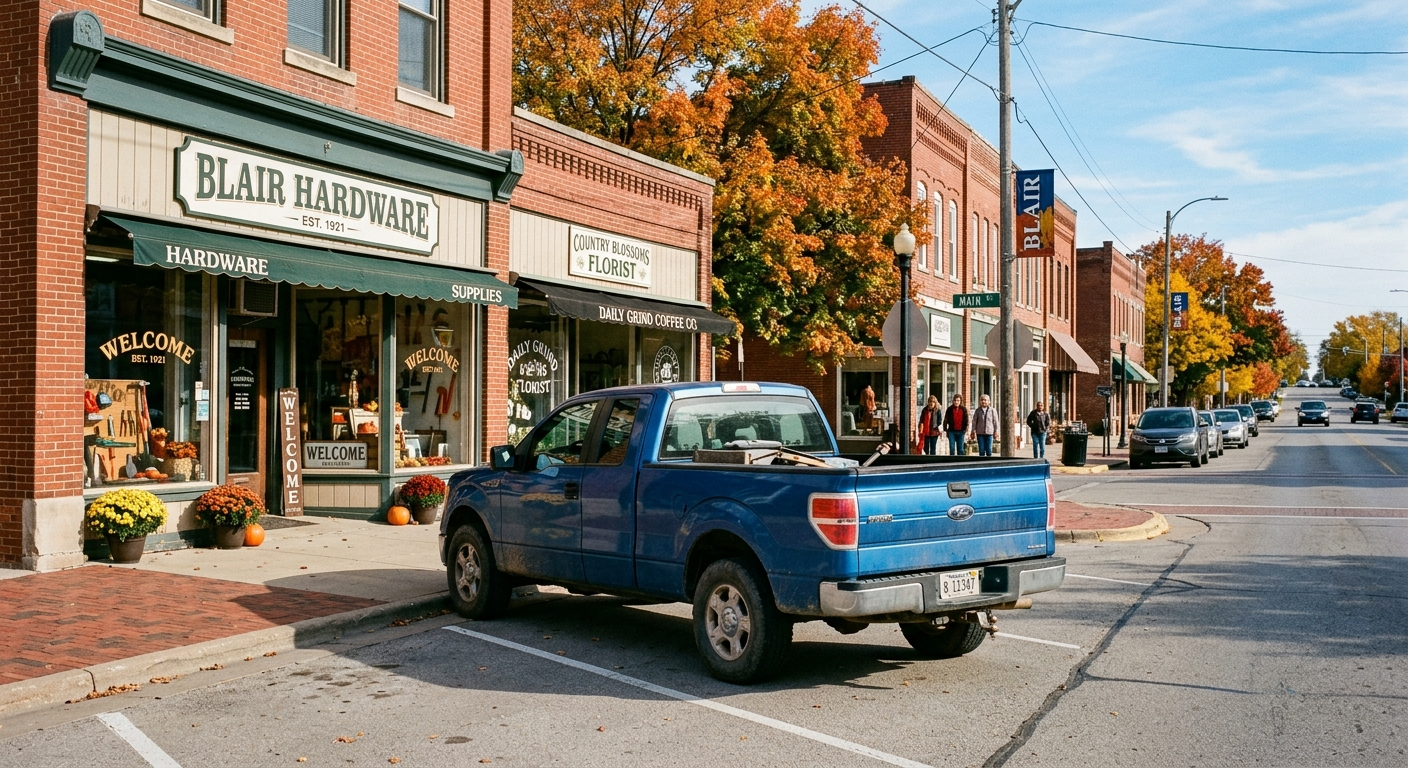
If you have opened your homeowners insurance renewal lately and wondered why your premium went up again, you are not alone. Nebraska homeowners insurance rates have climbed steadily over the past few years, and homeowners in Fremont, Blair, Elkhorn, and surrounding eastern Nebraska communities have felt it directly. Rates are not random. Once you understand the specific factors that underwriters look at, you can take real steps to control what you pay without gutting your coverage.
Nebraska's weather is the elephant in the room
Insurance is fundamentally about risk, and Nebraska carries a lot of it when it comes to severe weather. The state sits in one of the most hail-active corridors in the country. According to NOAA data, Nebraska regularly ranks in the top five states for hail events per square mile. Add tornadoes, straight-line wind, and ice storms to the picture and you can see why carriers price Nebraska policies differently than they price Oregon or Vermont.
Hail alone accounts for a large share of homeowners claims in this state. A single storm can produce softball-sized hail that punches through roofing, dents gutters, and cracks siding. After the 2019 and 2022 hail events that hit the Omaha metro and the eastern Nebraska corridor, carriers revised their pricing models and, in some cases, added separate wind and hail deductibles. If your policy has a percentage-based wind/hail deductible, that number applies to your dwelling coverage limit, not a flat dollar amount. On a $300,000 home with a 2% deductible, you are on the hook for the first $6,000 of any hail claim before the insurance company pays anything. For more on how hail claims work in Nebraska, the Nebraska hail damage claims guide breaks down the process in plain language.
Tornadoes and severe wind are a close second. Eastern Nebraska sits on the edge of Tornado Alley, and communities like Fremont and Blair have seen significant wind events in recent years. Carriers factor historical loss data for your specific ZIP code into the rate, so two homes with identical characteristics can carry different premiums simply because one sits in a higher-frequency storm zone.
Your home itself: the factors you can and cannot control
Beyond geography, underwriters look closely at the physical characteristics of the house. These variables tell a carrier how expensive a claim is likely to be if something goes wrong.
Dwelling replacement cost
This is the single biggest driver of your base premium. Your policy should be written to cover what it would actually cost to rebuild your home from the foundation up at today's material and labor prices, not what you paid for it and not what it would sell for on Zillow. Construction costs have risen sharply since 2020. Lumber, concrete, roofing materials, and skilled labor are all more expensive than they were. Many homeowners are unknowingly underinsured because their coverage limit never kept pace with inflation. A good independent agent will run a replacement cost estimate every year or two to make sure your coverage limit is accurate.
Roof age and material
Carriers in Nebraska pay close attention to your roof. An asphalt shingle roof that is 15 or more years old will cost more to insure than a newer one, and some carriers will decline to write a policy or will settle claims on actual cash value rather than replacement cost if the roof is over 20 years old. Impact-resistant roofing (Class 3 or Class 4 shingles) can earn a discount with many carriers because it holds up better in hail. If your roof is aging and you are shopping for a new policy, that upgrade could pay for itself faster than you expect. The post on Nebraska roof insurance, ACV vs. replacement cost explains exactly what those settlement options mean for your wallet.
Home age and construction type
Older homes often cost more to insure because of outdated electrical systems (knob-and-tube or aluminum wiring), older plumbing (galvanized steel or cast iron), and construction styles that are more expensive to replicate with modern materials. A 1920s craftsman bungalow in downtown Fremont carries a different risk profile than a 2015 ranch-style home in a Gretna subdivision. Carriers also distinguish between frame construction and masonry or brick, since fire behaves differently in each.
Square footage and finished features
More square footage means a higher replacement cost and a higher premium. Finished basements, custom kitchens, hardwood floors, and high-end cabinetry all raise the rebuild cost. If you renovated your home and did not tell your agent, your coverage limit may no longer reflect what it would cost to restore everything to its current condition.
Your personal profile matters too
Carriers do not just price the house. They price the homeowner as well, based on factors that predict future claim behavior.
Claims history
If you filed claims in the past three to five years, expect those to show up in your rate. Carriers pull your CLUE report (Comprehensive Loss Underwriting Exchange), which records claims you made under previous policies even at a different address. Multiple claims in a short window signal higher risk. This does not mean you should avoid filing legitimate claims, but filing for minor losses you could absorb out of pocket can raise your long-term cost.
Credit-based insurance score
Nebraska allows carriers to use a credit-based insurance score as a rating factor. This is not the same as your credit score, but it is built from similar data: payment history, outstanding debt, length of credit history, and comparable inputs. Statistically, people with stronger credit tend to file fewer claims, and carriers price accordingly. Improving your overall financial health over time can genuinely lower your insurance cost.
Your deductible choice
Choosing a higher deductible is one of the fastest ways to lower your annual premium. Moving from a $1,000 deductible to a $2,500 deductible can cut your premium by 10 to 20 percent depending on the carrier. The tradeoff is that you absorb more out of pocket on any claim. A practical guideline: your deductible should be an amount you could actually write a check for without a crisis. If $2,500 would clean out your emergency fund, stay at $1,000.
Bundling with auto insurance
Most carriers offer a multi-policy discount when you place both your home and auto with the same company. In Nebraska, that discount typically runs between 10 and 20 percent on the homeowners policy. If you are currently insuring your car and home with different companies, there is a good chance you are leaving money on the table. The post on how to bundle auto and home insurance in Nebraska walks through when bundling makes sense and when it does not.
What Nebraska homeowners are actually paying
Statewide averages are a starting point, but they hide a lot of variation. Nebraska homeowners insurance rates average somewhere around $1,800 to $2,400 per year for a mid-range home, though that number shifts considerably based on location, home value, coverage level, and the carrier. Homeowners in eastern Nebraska, particularly in ZIP codes with recent large-loss events, may see quotes at or above the high end of that range. Homeowners in smaller communities with less dense claim history sometimes do better.
Nebraska does not have a state-run insurer of last resort the way some coastal states do. Every policy in this market is written by a private carrier, which means competition exists but so does the ability for carriers to raise rates or exit the market when losses exceed expectations. After several consecutive severe weather years, a handful of national carriers have tightened their underwriting criteria in Nebraska, making it more important to work with someone who has access to multiple companies.
The homeowners insurance Nebraska guide goes deeper on coverage types and what a solid policy actually includes if you want to pair that context with the rate factors covered here.
Practical ways to lower your rate without reducing your protection
There is a difference between buying less coverage and buying smarter. The adjustments below can reduce your premium while keeping the coverage that actually matters intact.
- Install a monitored security system. Many carriers offer 5 to 10 percent discounts for professionally monitored alarms that detect fire, smoke, or intrusion.
- Add water backup coverage and smart water sensors. Water damage is one of the most common homeowners claims. Some carriers reward proactive risk management with discounts or better terms when you have leak detection devices installed.
- Upgrade your roof to impact-resistant shingles. A Class 4 impact-resistant roof can earn meaningful discounts with Nebraska-active carriers. If you are re-roofing anyway, ask about the discount before you pick your shingle.
- Review your coverage annually. Automatic inflation adjustments are helpful but not always calibrated correctly. An annual review catches gaps and also catches over-insurance on personal property if your situation has changed.
- Ask about loyalty and new-home discounts. Many carriers offer discounts for homes built within the last ten years or for policyholders who have been claim-free for three or more years.
- Shop the market every two to three years. Carrier pricing shifts. A company that was the best value three years ago may not be today, especially after statewide loss events have driven repricing. An independent agent can shop multiple carriers without you having to call each one yourself.
The difference an independent agent makes on your rate
A captive agent works for one company. When that company's rates go up or their underwriting tightens, your options with that agent are limited to accepting the new price or shopping on your own. An independent agent works with multiple carriers and can move your policy when the market shifts, without you losing continuity of coverage or starting from scratch.
In Nebraska's current market, that flexibility matters. Some carriers have pulled back from certain ZIP codes or roof types. Others have introduced wind/hail deductibles where they previously had flat deductibles. An agent who only writes one carrier cannot tell you that a competitor offers better terms for your specific home. An independent agent can. If you want to understand more about why that distinction matters in practice, the independent vs. captive agent Nebraska post covers it in detail.
Get a rate comparison from Eric Luebbe Insurance Agency
Eric Luebbe Insurance Agency is an independent insurance agency serving homeowners across eastern Nebraska, including Fremont, Blair, Elkhorn, Gretna, Bennington, and dozens of surrounding communities. As an independent agency, we compare rates and coverage across multiple carriers to find the combination that fits your home, your risk tolerance, and your budget. We are not tied to one company, so we are not pushing one company's product.
If your renewal came in higher than expected, if you have not had your coverage reviewed in a few years, or if you are buying a home and need your first policy, we are ready to help. Call us at (402) 721-5454 or reach out through our contact page to get started. There is no obligation, and comparing your options costs you nothing.